
How to Build a Simple Meditation Corner in a Small Apartment
A practical guide to building a compact meditation corner in a small flat: the right spot, a supportive seat, warm light, one plant, and a routine you can keep.

Somewhere between the folding chair and the shoe rack, most small apartments have a corner that gets used for nothing. Not the good light of the window, not the doorway, just a rectangle of floor nobody claims. That is exactly where a meditation space can go. It does not need a spare room, a special mat, or a reshuffle of your furniture. It needs roughly a square metre, something honest to sit on, and a reason to come back to it tomorrow.
Choose the Corner Before You Buy Anything
Start with the floor, not the shopping. Walk through your flat at the time of day you are most likely to sit. If that is 7 a.m., look for the corner that gets early light. If it is 10 p.m., look for the one that is furthest from the kitchen and the television.
A workable meditation corner is about 90 by 90 centimetres, and 60 by 60 will do if that is what you have. What matters more is what is next to it. Sitting with your back to a solid wall feels more settled than sitting in the middle of a room, and it stops you from being startled by someone walking behind you. Avoid the strip of floor between the bedroom door and the wardrobe, even if it looks empty. It is empty because nobody can stand there.
Also check the boring things. Is there a socket nearby for a lamp, or will you be running an extension cord across the room? Is the radiator going to blast your neck in January? Small decisions like these determine whether you use the space or quietly resent it.
Get the Seat Right
The single most useful purchase is a firm cushion, and it should be higher than most people expect. The aim is for your hips to sit slightly above your knees, so your thighs slope gently down and your lower back can relax. For most adults that means 15 to 20 centimetres of height. If you sink into a soft floor cushion, your knees rise, your back rounds, and ten minutes feels like an hour.
You do not have to buy anything to test this. Two folded blankets, a firm pillow, or a folded duvet will tell you whether the height works before you spend money.
What actually works under you
- A firm round cushion on a folded blanket, so the cushion does not slide on bare floor.
- A low wooden bench if kneeling suits your knees better than cross-legged sitting.
- A sturdy kitchen chair pulled into the corner, feet flat, back away from the backrest.
- The edge of the bed, if the corner is beside it and you can sit with your feet on the floor.
- A stack of two hardback books with a folded cloth over them, which is less elegant than a bench but works.
Whichever you choose, keep it in the corner rather than dragging it out each time. Friction is what kills a habit.
Light: Warm, Low, and Never Overhead
Ceiling lights flatten a room and make a small corner feel like a corridor. A single warm lamp placed low, at about knee or hip height, does the opposite: it pools light on the floor and leaves the edges soft. A small floor lamp, a table lamp on a low stool, or a paper lantern all do the job. If the lamp has a dimmer, use it. If it does not, choose a warm bulb rather than a bright white one.
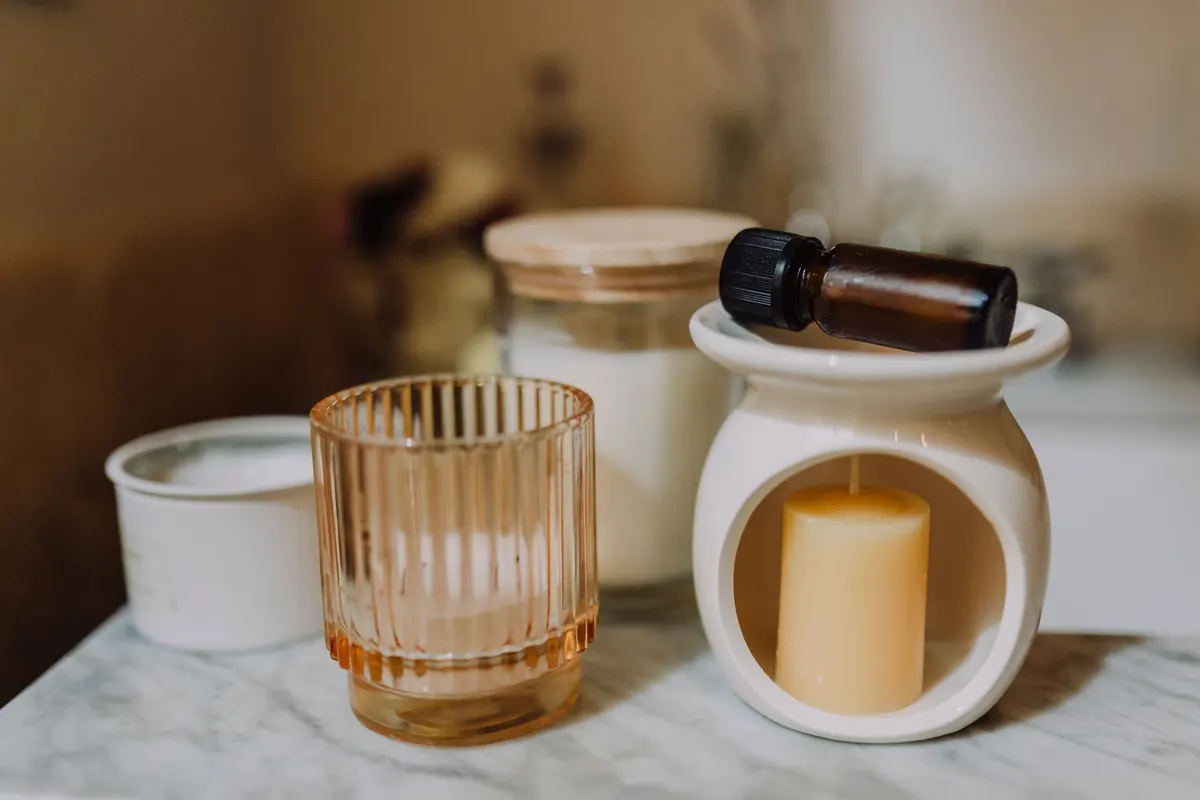
Candles are fine if you genuinely stay in the room and keep them away from curtains, cushions and anything else that hangs. If you tend to close your eyes and drift, a lamp is the safer choice. Whatever you use, put it on a timer or switch it off at the wall when you finish; a corner that is quietly lit all evening stops feeling like somewhere specific.
One Plant, One Texture, Nothing More
The temptation is to decorate. Resist it for the first month. A corner with a seat, a lamp and a single plant reads as calm; a corner with a singing bowl, three crystals, a framed print and an incense holder reads as a shelf.
For low-light flats, a snake plant, a ZZ plant, a spider plant or a pothos will all cope with a spot away from the window. Put it in a plain terracotta pot and raise it slightly on a small box or stool so it is not lost at floor level. Water it on the same day each week and wipe the leaves occasionally; a dusty plant does not help anyone.
Then add one texture. A small rug, a folded wool blanket, or a woven mat gives the eye something soft to land on and makes the corner feel like a place rather than a gap. Three objects is a good limit: seat, light, plant. Four if the rug counts.
Set It Up in an Afternoon
This is a two-hour job at most, and it is worth doing in order rather than all at once.
- Empty the corner completely. Take everything out, including the things you have been ignoring for a year.
- Clean the floor and skirting board, and check for cables you will trip over.
- Put down a rug or mat, if you are using one.
- Place the seat against the wall and sit on it. Adjust the height before you go any further.
- Add one low surface for a lamp or a glass of water: a stool, a small side table, a floating shelf at about 40 centimetres.
- Set the lamp and check how the light falls when you are sitting down, not standing up.
- Add the plant last, then sit for five minutes and add nothing else.
That final step is the one people skip. If the corner feels good with a seat and a lamp, stop there. You can always add the blanket in a fortnight.
Stop It Becoming a Shelf
Every horizontal surface in a small flat collects things. The meditation corner will collect them faster than most, because it is quiet and out of the way and therefore convenient. Bills, laundry, a laptop, the bag you will deal with later.
Two rules help. First, nothing lives in the corner unless it belongs to sitting there. Second, if the space must double as storage, use one closed basket and keep the cushion on top of it, so sitting down is still the easiest option in the room. Tidy the corner at the end of each session, the way you would clear a workbench. Thirty seconds, and it stays usable.
The corner works when sitting down takes less effort than talking yourself out of it.
Five Minutes, Most Days
Once it is built, the point is to use it, and five minutes is enough to begin with. Pick a time you will actually keep, sit down, set a timer so you are not checking the clock, and stay until it goes off. Sit however you like, as long as your hips are above your knees and your back is doing as little work as possible. Let the breath be ordinary. If your mind fills with the shopping list, that is not a failure; it is what minds do.
Keep a blanket within reach so that a cold morning does not become a reason to skip. Do not measure the practice by how calm you feel afterwards; measure it by whether you showed up. Some sessions will be restless and still worth doing.
If you have back pain, knee trouble, or a health condition that affects how you sit, speak to a doctor or physiotherapist about a position that suits you rather than pushing through discomfort. Five minutes of sitting should not hurt. Adjust the cushion, use a chair, or shorten the session — the corner is there to support you, not to test you.
And when life gets busy and you ignore the corner for two weeks, as you will, do not pack it up. Straighten the rug, water the plant, sit down for three minutes, and carry on.
Photo: pixel2013 / Pixabay